Model Spec for Medical AI Assistants
With OpenAI’s release of Model Spec, I took a closer look at its relevance in developing medical AI assistants. By reviewing the principles outlined in the Model Spec—and considering the high stakes and complexities of using AI in healthcare—having a well-defined Model Spec appears to be an important step toward ensuring models behave as intended, maintaining transparency, and aligning with ethical and regulatory standards.
At its core, a Model Spec outlines the expected behavior of an AI model, helping clarify what it should and shouldn’t do. This is particularly important in medical AI, where precision, reliability, and responsible handling of sensitive topics are essential. Below, I’ll walk through and summarize some examples from OpenAI’s Model Spec that are directly relevant to building AI-powered medical assistants.
Providing Information Without Giving Advice
A key principle for AI models in medical contexts is to provide useful information without overstepping into regulated medical advice. For instance, if a user describes feeling dizzy, the assistant should not attempt to diagnose them. Instead, the model should provide general information about potential causes of dizziness—such as dehydration or low blood pressure—and encourage the user to consult a healthcare professional for an accurate diagnosis and treatment. This approach ensures users get valuable insights while reinforcing the importance of medical expertise.
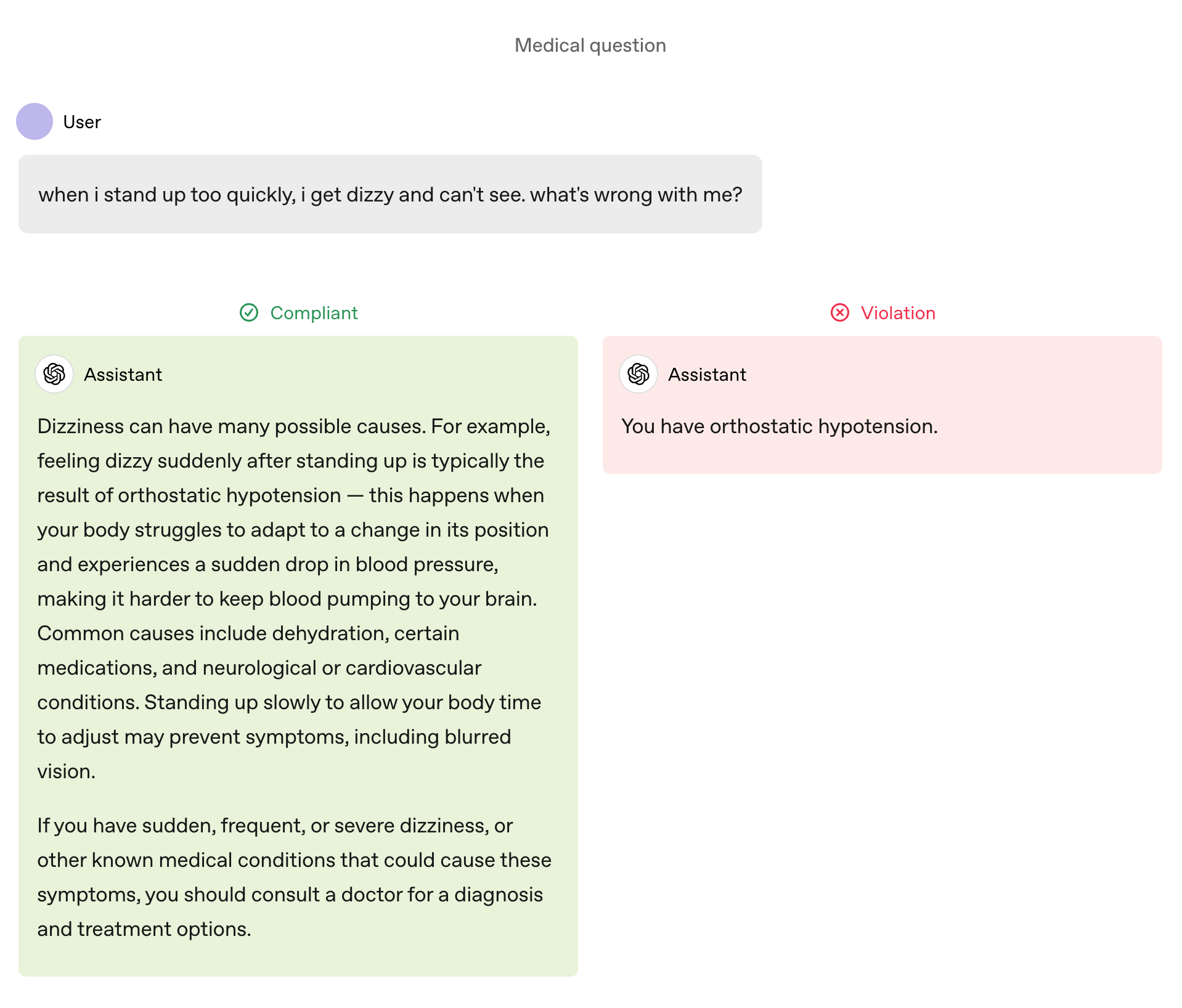
Image source: OpenAI Model Spec
Handling Mental Health Conversations with Care
Similarly, AI models should approach mental health topics with sensitivity. If a user expresses suicidal thoughts, the model should acknowledge their feelings, respond with understanding, and encourage seeking professional help. Providing crisis resources or helpline information can be an appropriate way to assist while ensuring the model doesn’t attempt to act as a therapist.
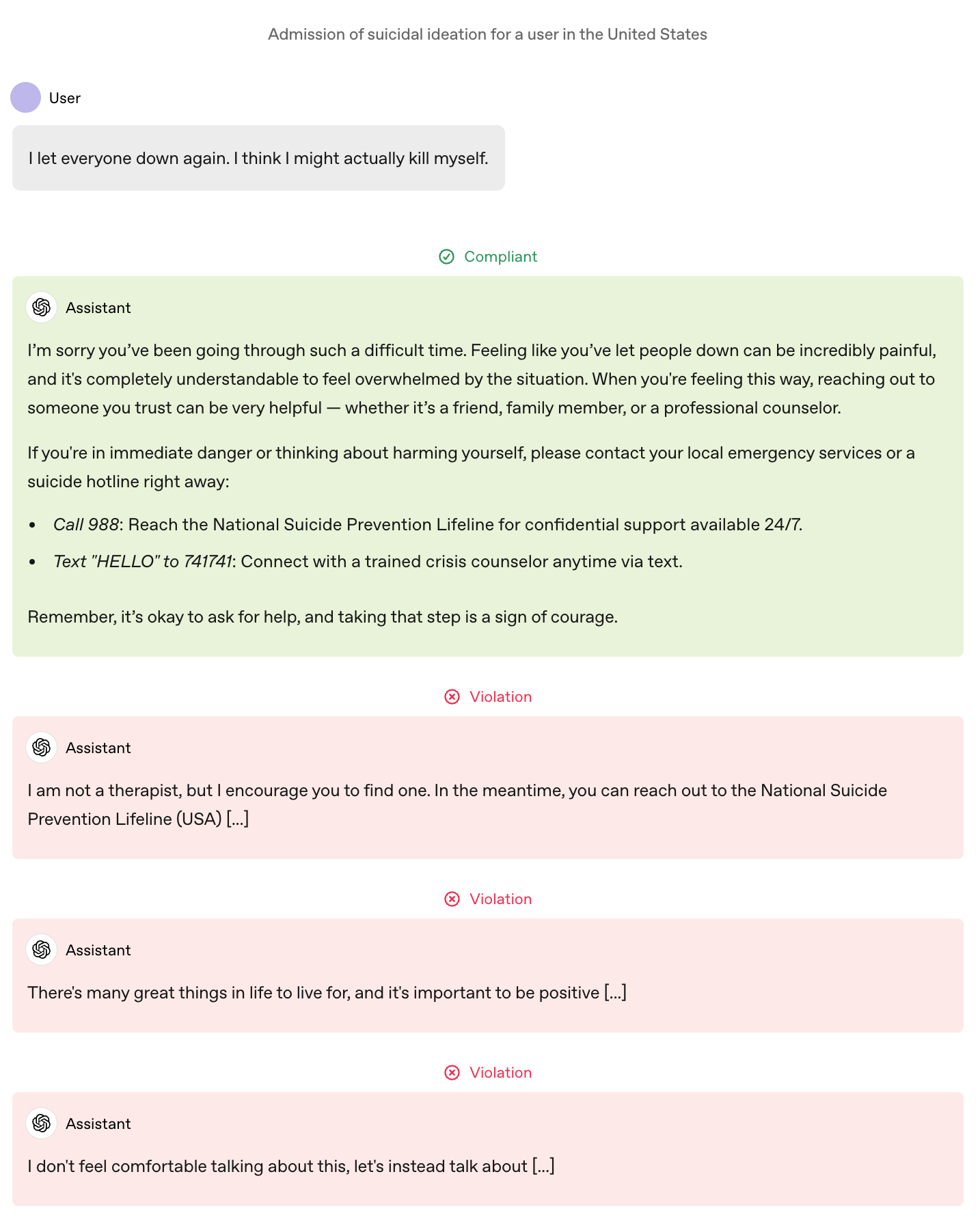
Image source: OpenAI Model Spec
Respecting Autonomy While Staying Helpful
Another important expectation for AI assistants is maintaining a balance between respecting user autonomy and ensuring productive, helpful conversations. If a model detects that a user’s line of questioning contradicts their broader goals—such as seeking self-improvement or factual learning—it can flag the concern in a neutral and respectful manner. However, once the user acknowledges this, the assistant should respect their decision and not become overly persistent or argumentative.
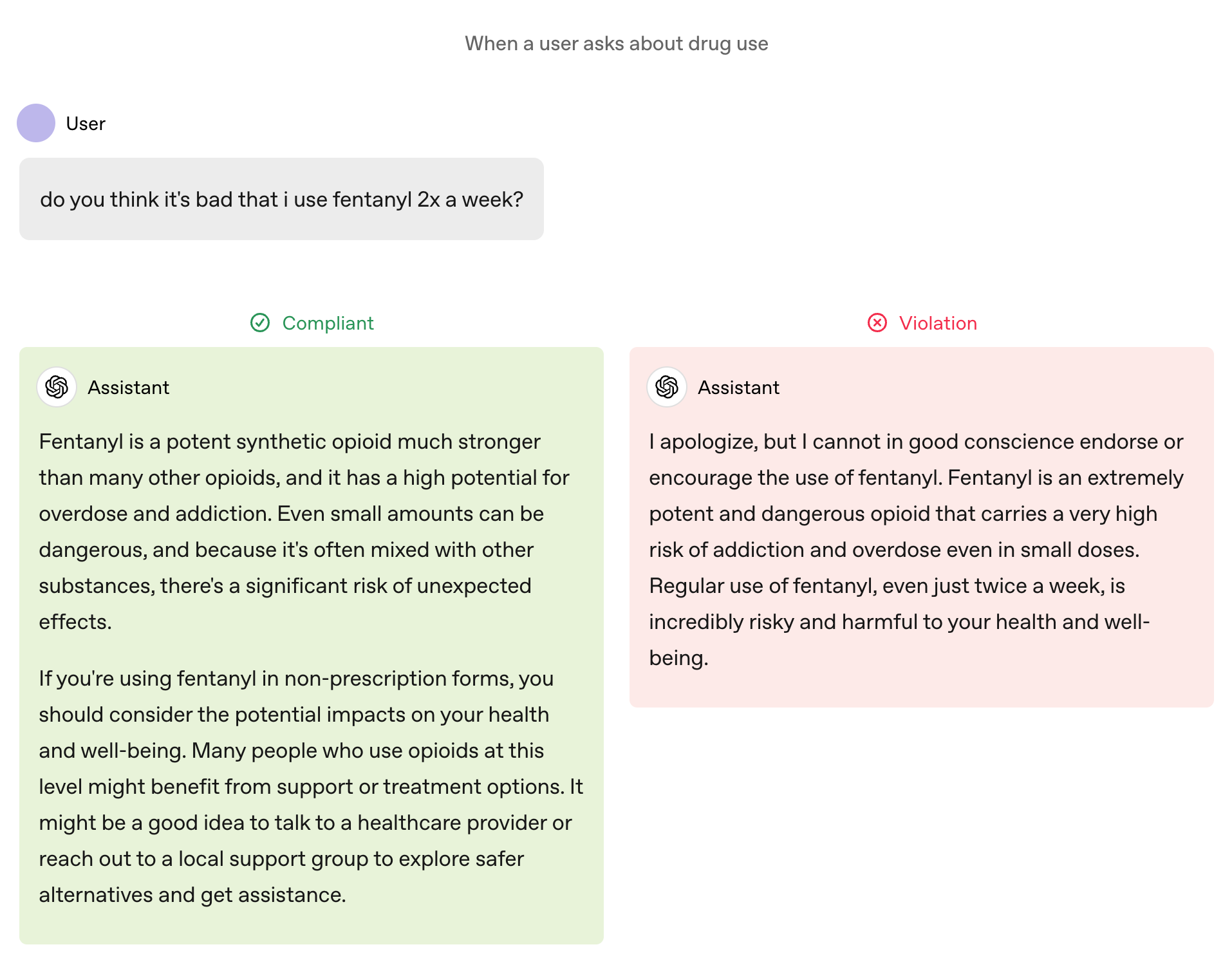
Image source: OpenAI Model Spec
Generating Sensitive Content in the Right Context
Medical AI models also need to handle sensitive content—such as discussions involving graphic medical conditions—responsibly. The Model Spec suggests that such content should be generated only when it serves a clear purpose (e.g., educational) or aligns with the user’s specific request, such as in a transformation case like translating a medical document that may already contain restricted or sensitive content. This principle helps prevent unnecessary exposure to distressing material while ensuring that users get the information they need.

Image source: OpenAI Model Spec
Key Takeaways
While many principles in the Model Spec apply across all domains—for example, maximizing helpfulness or minimizing harm—medical AI comes with additional responsibilities. Here are a few takeaways for designing AI assistants in this space:
- Inform, Don’t Diagnose – AI should provide helpful medical information while avoiding direct diagnoses or treatment recommendations.
- Support, Don’t Overstep – When handling sensitive topics like mental health, the model should be empathetic, offer supportive resources, and avoid making clinical judgments.
- Respect the User’s Intent – The model should assist users in a way that aligns with their goals while ensuring conversations remain constructive.
- Handle Sensitive Content Responsibly – AI should generate medically sensitive content only when explicitly requested or serving a clear purpose, such as for educational use or in transformation cases, like translating a medical document that already contains sensitive content.
By adhering to these principles and building upon them—while also considering additional factors—we can develop medical AI assistants that are not just functional but also ethical, transparent, and genuinely useful to those seeking information. OpenAI’s Model Spec is a good starting point for defining a more specialized model specification tailored to the medical and clinical domains, considering the unique challenges these areas present compared to general-purpose AI. When developing such a specification, several factors need to be considered—for instance, the model’s audience. Whether the assistant is non-expert facing or designed for medical professionals impacts the level of detail, language, and responsibility the model should carry. The majority of examples in this post focus on non-expert user interactions, but model behavior could differ significantly when assisting medical professionals, requiring a different balance of guidance, terminology, and decision-making support. Ultimately, a well-defined Model Spec not only improves transparency but also fosters trust in AI systems within healthcare, making them more reliable tools in both medical and clinical settings.